From what I read, the modern solution has smooth 60 fps, compared to 2-10 FPS with the JPEG method. Granted, that probably also factors in low network speeds, but I’d imagine you may hit a framerate cap lower than 60 when just spamming JPEGs.
They didn’t explicitly say but it sounds like the JPEG solution can’t put out a substantial FPS. If you start to do fancier stuff like sending partial screenshots or deltas only then you get the same issues as H264 (you miss a keyframe and things start to degrade). Also if you try and put out 30 JPEGs per second you could start to get TCP queuing (i.e. can’t see screenshot 31 until screenshot 30 is complete). UDP might have made this into a full replacement but as they said sometimes it’s blocked.


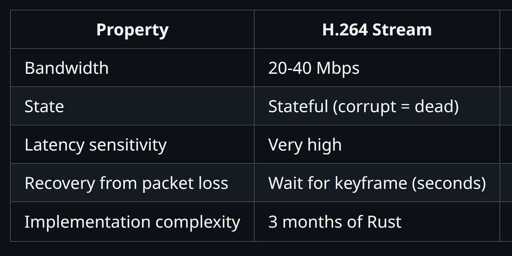
I don’t understand why they bother with the “modern” method if the fallback works so well and is much simpler and cheaper.
When the unga bunga solution works better than the modern one
JPEG method tops out at 5-10fps.
Modern method is better if network can keep up.
Don’t need high fps to watch an ai type.
Have you ever told an engineer not to build something overdesigned and fun to do?
From what I read, the modern solution has smooth 60 fps, compared to 2-10 FPS with the JPEG method. Granted, that probably also factors in low network speeds, but I’d imagine you may hit a framerate cap lower than 60 when just spamming JPEGs.
They didn’t explicitly say but it sounds like the JPEG solution can’t put out a substantial FPS. If you start to do fancier stuff like sending partial screenshots or deltas only then you get the same issues as H264 (you miss a keyframe and things start to degrade). Also if you try and put out 30 JPEGs per second you could start to get TCP queuing (i.e. can’t see screenshot 31 until screenshot 30 is complete). UDP might have made this into a full replacement but as they said sometimes it’s blocked.